
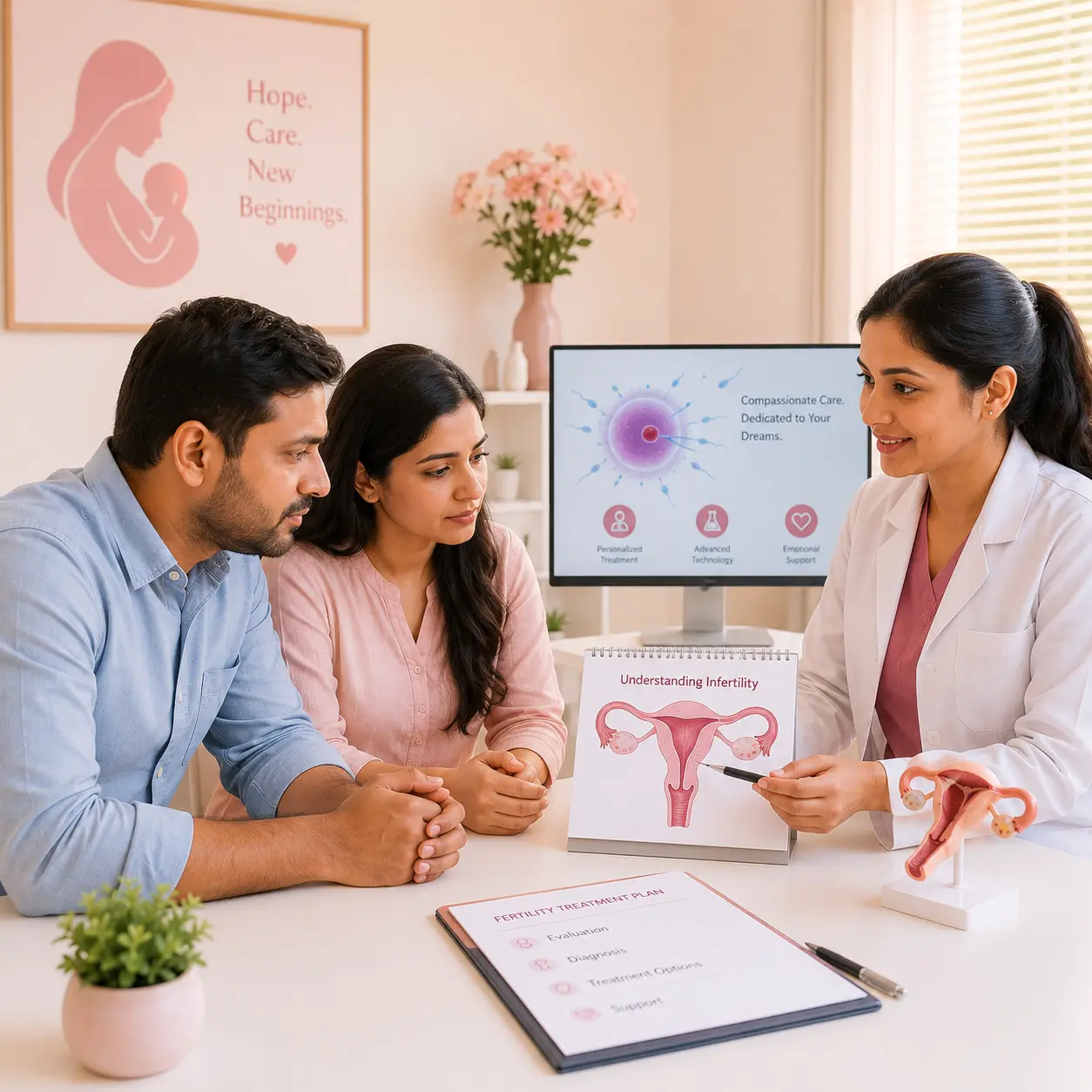
Personalized Fertility Care to Help You Conceive
At Primrose Women’s Clinic, we provide compassionate and evidence-based infertility treatment for couples facing difficulties in conceiving. Our specialists identify the underlying cause of infertility and create personalized treatment plans to improve your chances of a healthy pregnancy.
What is Infertility?
Infertility is the inability to conceive after:
- 12 months of regular, unprotected intercourse (under 35 years)
- 6 months if the woman is 35 years or older
Both female and male factors can contribute to infertility, making evaluation of both partners important.
Our Infertility Services
- Fertility evaluation and diagnosis
- Hormone testing and ultrasound scans
- Ovulation induction
- Follicular monitoring
- Intrauterine Insemination (IUI)
- In Vitro Fertilization (IVF)
- Intracytoplasmic Sperm Injection (ICSI)
- Fertility counseling and lifestyle guidance
When Should You See a Fertility Specialist?
You should consult a specialist if you:
- Have been trying to conceive without success
- Have irregular periods or PCOS
- Have experienced recurrent miscarriages
- Are over 35 and planning pregnancy
- Have known male fertility concerns
Why Choose Primrose Women’s Clinic?
- Experienced fertility specialists
- Personalized treatment plans
- Advanced fertility diagnostics
- Modern treatment options
- Compassionate and confidential care
Frequently Asked Questions
When should I seek infertility treatment?
If you’ve been trying to conceive for one year (or six months if you’re over 35), it’s time to consult a fertility specialist.
Is infertility treatable?
Yes. Many infertility conditions can be successfully treated with medication, lifestyle changes, IUI, IVF, or other advanced fertility treatments.
Is infertility only a woman’s problem?
No. Male factors contribute to many infertility cases, so both partners should be evaluated.
Is IVF always necessary?
No. Treatment depends on the cause of infertility. Many couples conceive with simpler treatments before IVF is considered.
Can lifestyle changes improve fertility?
Yes. Maintaining a healthy weight, eating a balanced diet, exercising regularly, reducing stress, and avoiding smoking and excessive alcohol can help improve fertility.